Learning Outcomes
Upon successful completion of this lesson, students will be able to:
i. Define the terms "hardware" and "software" and explain their significance in the realm of computers.
ii. Differentiate between hardware and software, recognizing their distinct roles in enabling computer functionality.
iii. Identify various hardware components, such as the CPU, memory, and storage devices, and understand their functions.
iv. Recognize different types of software, including operating systems, application software, and programming languages.
v. Appreciate the symbiotic relationship between hardware and software, acknowledging their interdependence in achieving computer operations.
Introduction
In the world of computers, hardware and software stand as the inseparable pillars of functionality. Hardware encompasses the tangible components, the physical building blocks that form the computer system, while software represents the intangible programs, the instructions that bring hardware to life. This lesson delves into the intricacies of hardware and software, guiding students through a journey of understanding their distinct roles and their harmonious coexistence.
i. Hardware: The Tangible Foundation
Hardware refers to the physical components of a computer system, the tangible elements that we can see, touch, and interact with. These components include:
Central Processing Unit (CPU): The "brain" of the computer, responsible for executing instructions and performing calculations.
Memory: Temporary storage for data and instructions, providing the CPU with immediate access to essential information.
Storage Devices: Permanent storage for data, such as hard disk drives and solid-state drives, ensuring long-term preservation of information.
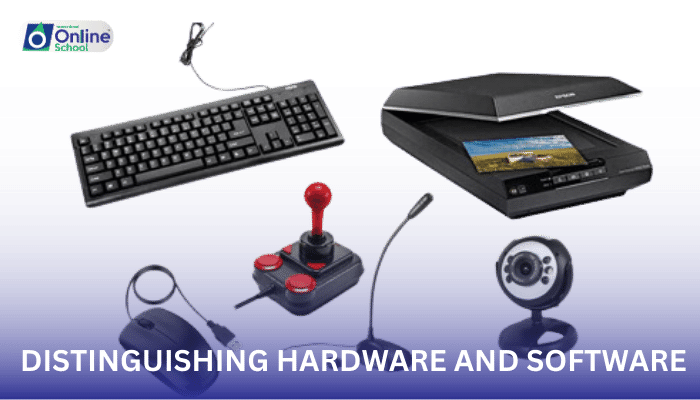
Input Devices: Tools that allow users to interact with the computer, such as keyboards, mice, and touchscreens.
Output Devices: Channels for displaying information, such as monitors, printers, and speakers.
ii. Software: The Intangible Instructions
Software represents the intangible programs, the sets of instructions that enable computers to perform specific tasks. These programs are written in programming languages, such as C++, Java, and Python, and can be categorized into three main types:
Operating Systems: The foundation upon which other software applications run, managing hardware resources and providing a platform for user interaction.
Application Software: Programs designed to perform specific tasks, such as word processors, web browsers, and video games.
Programming Languages: Tools used to create software, providing the building blocks for developing new programs and applications.
iii. The Interplay of Hardware and Software: A Symbiotic Relationship
Hardware and software are not isolated entities; they exist in a symbiotic relationship, each dependent on the other for effective operation. Hardware provides the physical framework for execution, while software breathes life into the system, dictating its behavior and functionality.
Consider a simple task like typing a document. The keyboard, a hardware component, captures your keystrokes, sending signals to the CPU. The CPU, in turn, relies on software instructions to interpret these signals, translating them into text on the screen. This seamless interplay between hardware and software enables computers to perform a vast range of tasks, from mundane to complex, transforming raw data into meaningful information.
Hardware and software, the tangible and intangible constituents of computers, work in tandem to create the versatile tools that have revolutionized our lives. Hardware provides the physical infrastructure, while software imparts the instructions that bring it to life. Understanding this distinction and appreciating their interdependence is crucial for comprehending the essence of computers and harnessing their power to enhance our personal and professional endeavors. As technology continues to evolve, the interplay between hardware and software will remain at the heart of innovation, enabling the development of ever more powerful and sophisticated computing solutions.
